You found a scorpion. Here is what to do.
The striped bark scorpion is the one people meet across Texas and the south-central states. Its sting hurts, but for a healthy adult it is almost never dangerous. Start with the question you actually have.
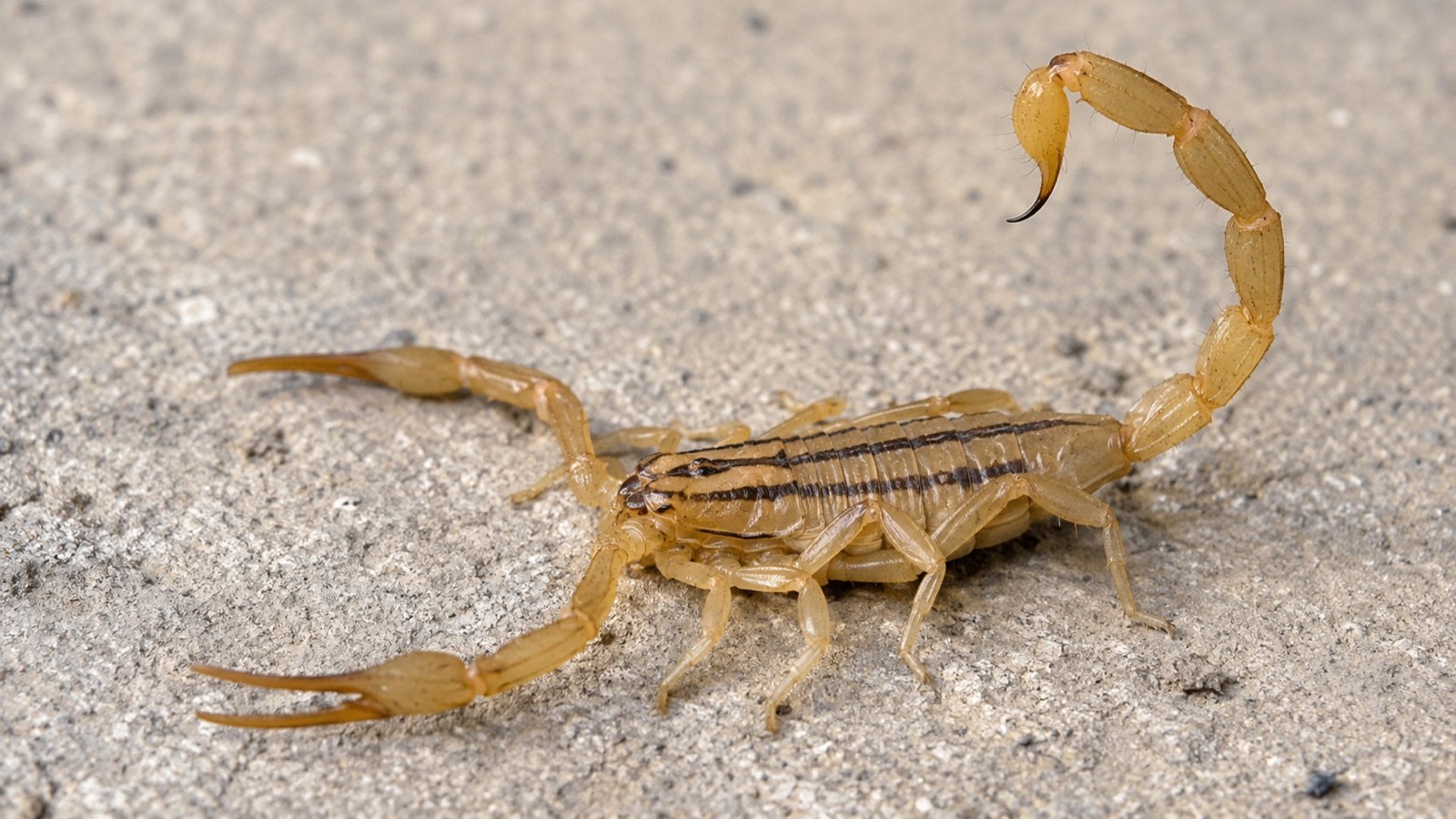
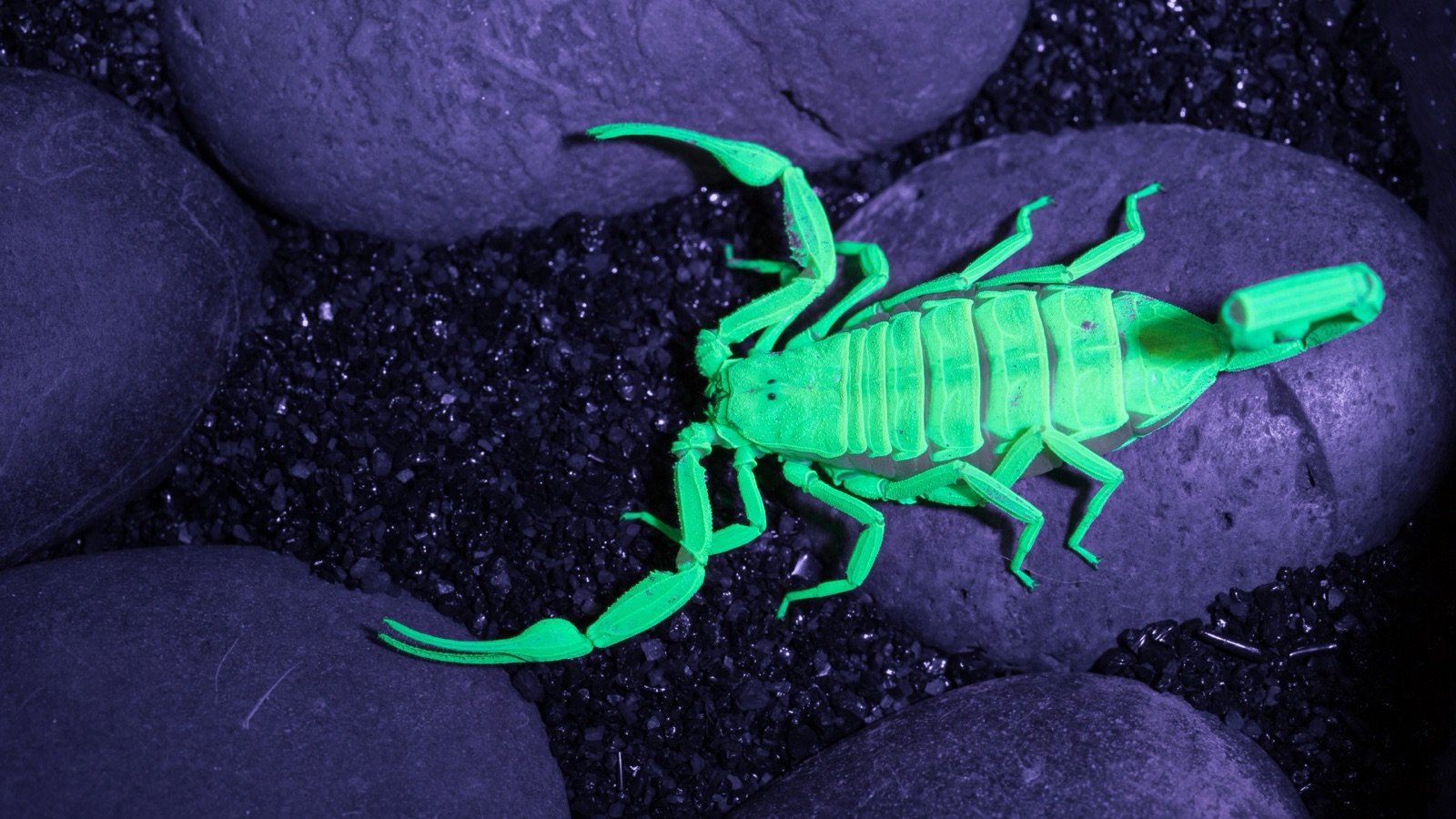
Striped bark scorpion in daylight. Tap Blacklight to see how it glows under UV.
Sharp, wasp-like pain with tingling or numbness near the sting. Usually eases within hours.
Serious reactions are uncommon for this species. It is not the dangerous Arizona bark scorpion.
Young children, pets, and anyone with an allergy warrant closer attention. See the sting pages.
The two questions people ask first
Is the striped bark scorpion dangerous?
For most people: painful, but not dangerous.
A sting from Centruroides vittatus typically causes local pain, tingling, and swelling rather than a medical emergency. The species that sends people to the hospital is its relative, the Arizona bark scorpion, which this guide helps you tell apart.
Full sourced answer, and how to be sure which one you have →Not medical advice. Every claim on the full page is cited to poison-control and university sources.
I just got stung. What do I do?
Clean it, cool it, treat the pain, and watch for a reaction.
Wash the area, apply a cool compress, and use an over-the-counter pain reliever if appropriate. Most stings settle on their own. Call for help right away if there is trouble breathing, a spreading reaction, or the person is a small child.
Full first-aid steps and the emergency signs →Not medical advice. If symptoms are severe or worsening, contact Poison Control or emergency services.
Start where you are
What did I find?
Confirm it is a striped bark scorpion, and rule out the dangerous look-alike.
STINGSI got stung
Symptoms, first aid, and the signs that mean you should get help.
HABITATWhy is it here?
Where they live, where they hide, and why one got indoors.
CONTROLKeep them out
Sealing, yard habitat, and finding them with a UV light.
Do they live where I do?
The striped bark scorpion is established across the south-central United States and is the scorpion most people in this region encounter. If you are in one of these states, yes, they are around you.
A precise, sourced range map lives on the habitat page. Distribution shown here is descriptive, not a boundary.
Why you can trust this
This is a non-commercial reference. There is nothing to buy here and no pest-control service behind it, which is exactly why it has no reason to exaggerate the danger. Every factual and medical claim on a content page traces to a named, authoritative source, with a visible reference list and the date it was last reviewed.
The goal is simple: give a worried homeowner the calm, correct answer, and show the receipts.
- 01Poison control and CDC. Sting management and when to seek care.
- 02University extension entomology. Texas A&M AgriLife and peers for identification, range, and behavior.
- 03Peer-reviewed research. PubMed-indexed studies for venom and fluorescence.
- 04State health and wildlife agencies. Regional distribution and advisories.